0%

VEI Check · Stress

Measuring your body's signals of tension:
stress testing

Stress testing measures pulse waves and brainwaves through sensors while you sit, providing numerical measures of autonomic nervous system balance and the stress response. At its core is the HRV test, which calculates heart rate variability from the pulse wave. The measurement takes only a few minutes and is painless. At VEI Clinic, we recommend it as supporting information alongside blood tests for people with ongoing fatigue, insomnia or palpitations.

VEI Clinic, Gangnam — VEI Check · Stress

What We Measure

The autonomic nervous system includes the sympathetic system, which is active during tension, and the parasympathetic system, which is active at rest. Changes in the intervals between heartbeats, called heart rate variability (HRV), help us estimate the balance between these systems and the body's ability to respond to stress.

  • Stress index calculated from heart rate variability
  • Autonomic nervous system balance and health
  • Flexibility of the heart rhythm assessed through heart rate variability
  • A simple brainwave reading of tension and concentration on the day of the test

Who It May Suit

  • People who remain tired after sleep and tire easily
  • People who have trouble falling asleep or wake often
  • People with palpitations, tingling in the hands and feet or digestive discomfort whose other tests have not shown a clear cause
  • People who want numerical information about their condition during a period of heavy work demands

Photo credits (cropped) Chris Hope (CC BY 2.0) · Laurens R. Krol (CC BY 4.0)

How to Read Your Results

Results are affected by how you feel that day, sleep, caffeine and medications. Repeating the test after changing your daily habits is more meaningful than a single result.

This test does not diagnose depression, anxiety disorders or heart disease. If low mood lasts more than 2 weeks, or if you have chest pain or fainting, you may need psychiatric care or heart testing. We will guide you on the next steps.

The HRV stress index is based on heart rate variability and generally rises as variability falls and the balance shifts toward the sympathetic system. Heart rate variability naturally declines with age, so the same number can mean different things at different ages. The brainwave stress measure draws on the increase in faster brainwaves that comes with tension or a busy mind. When we explain your results, we also check whether the brainwave and pulse wave measures point in the same direction.

HRV results commonly include values such as SDNN and RMSSD. SDNN reflects how much the intervals between heartbeats varied overall during the recording, while RMSSD looks at the difference between neighbouring beats and better reflects parasympathetic activity. Values higher than is typical for your age generally suggest that your body shifts back toward rest well after tension. If you have an arrhythmia such as atrial fibrillation or frequent ectopic beats, however, the irregular rhythm can push these numbers up without meaning anything good, so the rhythm should be checked with an ECG first. The LF/HF ratio, often presented as the sympathetic to parasympathetic balance, is debated among researchers, so it is not used on its own, and because devices calculate values differently, numbers from another clinic cannot be compared directly.

Basic Brainwave Measurement and a Diagnostic EEG

VEI Clinic's brainwave measurement is a basic assessment used as a reference for stress and concentration. It differs from a diagnostic electroencephalogram (EEG) used in hospitals to investigate epilepsy, reduced consciousness or sleep disorders. If you need that kind of diagnosis, we recommend neurology care.

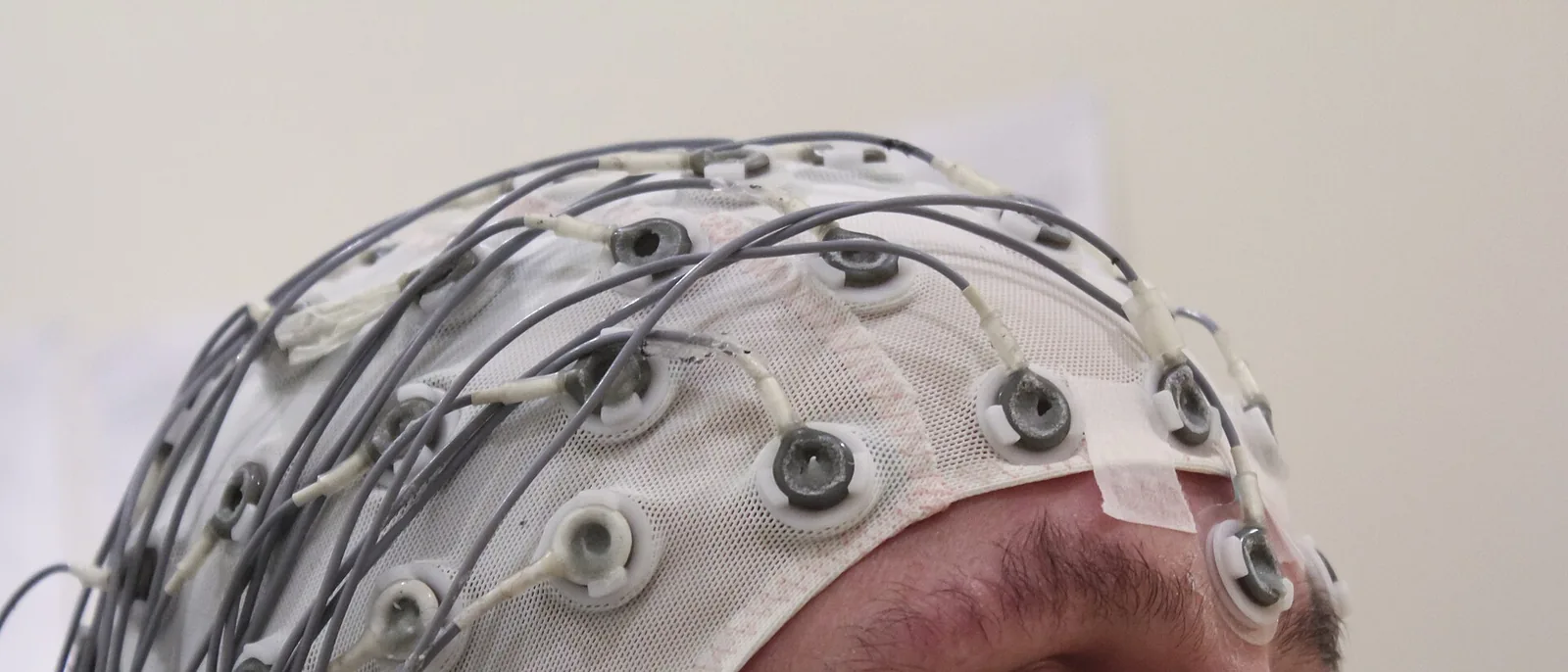
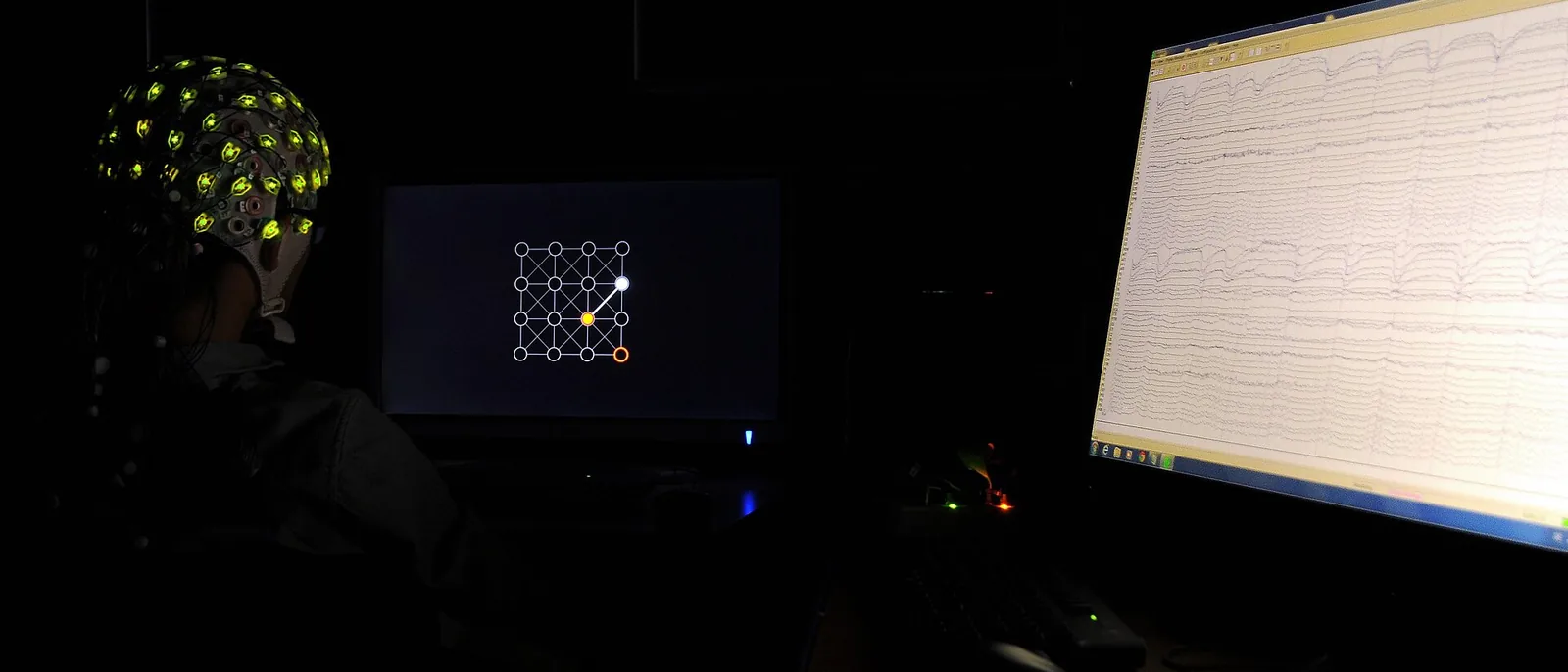
A quantitative EEG (QEEG) in a hospital records brainwaves through electrodes placed across the scalp, converts them into values for each frequency band and compares them with reference data for the same age group; neurology and psychiatry use it alongside other tests as supporting information for diagnosis. VEI Clinic's brainwave analysis also separates fast and slow waves, but it is not meant to identify disease and only looks at how tense you are on the day of the measurement.

How It Differs from a Stress Test at a Psychiatry Clinic

Psychiatry clinics also commonly use HRV tests to assess stress, sometimes together with a quantitative EEG recorded through electrodes across the scalp. Even with the same HRV test, what differs is what the results are read alongside. A psychiatry clinic combines them with an interview and depression and anxiety questionnaires, leading to diagnosis and treatment of conditions such as depression or anxiety disorders.

At VEI Clinic, HRV results are read together with blood test results, looking first at whether fatigue and palpitations have another physical cause.

Before Your Test

  • Avoid coffee, energy drinks and smoking for 2 hours before the test
  • Avoid a large meal or strenuous exercise just before the test, and sit and rest for about 5 minutes
  • Tell us if you take medication that affects your heart rate, such as blood pressure medication

When an autonomic problem is suspected

The autonomic nervous system controls functions that run without conscious effort, such as heart rate, blood pressure, digestion, sweating and body temperature. Terms like autonomic dysfunction or dysautonomia loosely describe a state where this control is disturbed and palpitations, dizziness, digestive discomfort, tingling hands and feet and trouble sleeping overlap; it is not a single diagnosis.

An HRV (heart rate variability) test gives a reference picture of this balance. Severe dizziness or near fainting on standing, or autonomic symptoms in people with diabetes or Parkinson's disease, may need detailed tests such as tilt testing, so we refer you to neurology.

Autonomic function testing in a neurology department measures heart rate changes during deep breathing and while holding your breath and bearing down, blood pressure and pulse changes as a tilt table raises you upright, and sweat responses. It covers more than a seated HRV test and is used to determine whether autonomic dysfunction is actually present and whether the sympathetic or parasympathetic system is affected.

Symptoms of Dysautonomia and Conditions to Rule Out

Symptoms of dysautonomia rarely stay in one place; they tend to show up across several body systems at once. Your pulse may race while you are resting, or your vision may go dark when you stand up. Constipation and diarrhea may alternate, or you may feel bloated soon after eating. You may sweat too much or too little, have cold hands and feet or a face that flushes easily, or need to urinate often. Fatigue, headaches and trouble concentrating often come along with these.

Symptoms that seem autonomic can also come from other conditions. Common examples are an overactive thyroid, anemia, low blood sugar, heart rhythm problems, dehydration, the effects of caffeine or some cold medicines, and panic disorder. That is why testing for dysautonomia starts by ruling out these causes. Blood tests check thyroid function, anemia and blood sugar, and blood pressure and pulse are measured as you go from lying down to standing.

If you have crushing chest pain, breathlessness that makes it hard to finish a sentence, fainting, sudden weakness in the arm or leg on one side of the body, or slurred speech, do not wait it out as an autonomic problem; call 119, the emergency number in Korea, or go to an emergency room right away.
Treatment and Medication for Dysautonomia

How dysautonomia is treated depends on whether there is an underlying cause. If a cause is found, such as nerve damage from diabetes, a thyroid condition or the effects of a medication, treating that cause comes first, through blood sugar control, thyroid treatment or a medication change. When symptoms have built up from stress, lack of sleep and overwork without a clear disease behind them, treatment centers on restoring a disrupted daily rhythm.

Whether or not medication is used, daily habits are the foundation of treatment. It helps to go to bed and get up at the same times, do regular aerobic exercise such as brisk walking or cycling, cut back on caffeine and alcohol, and practice breathing slowly with long exhales. If you get dizzy when you stand, drink enough fluids, and when getting up from lying down, sit for a moment first and then rise slowly. If you have been told to limit fluids because of heart or kidney disease, ask your doctor how much to drink first.

Medications often used for autonomic symptoms ease problems such as palpitations, anxiety and dizziness rather than restoring the balance itself. A medication that slows the heart may be used for a pulse that runs too fast, and one that supports blood pressure for a large drop on standing. If anxiety or depression is significant, psychiatric care is added. Which medication is right is decided by a doctor after checking for other conditions and reviewing what you already take.

The VEI Clinic Approach

Considering stress testing alongside blood tests and cortisol rhythm testing can give us a broader view of the causes of fatigue. An internal medicine specialist explains your results and starts with guidance on sleep, exercise and diet.

FAQ

Frequently Asked Questions

How long does a stress test take?

The measurement takes only a few minutes. Even with preparation and an explanation of the results, the visit does not take long, and the test is painless.

Can autonomic testing diagnose dysautonomia?

This test provides supporting information about autonomic balance and does not diagnose a condition on its own. We assess the results alongside your symptoms and other tests.

Can brainwave measurement detect brain disease?

VEI Clinic's brainwave measurement is a basic assessment of stress and concentration. Conditions such as epilepsy are diagnosed through a diagnostic EEG in a neurology setting.

Can I have it on the same day as an IV?

Yes. We can take the measurements during your IV visit as supporting information about how you are doing.

How long does treatment for autonomic problems take?

It depends on the cause. When a correctable cause such as a medication or a thyroid problem is responsible, symptoms may improve fairly soon after it is dealt with. When stress and lack of sleep have built up over a long time, it often takes several weeks or more after changing your habits to notice a difference, and some causes, such as nerve damage from diabetes, need ongoing management.

Plan your visit to VEITell us your health concern and preferred visit date. Our team will help you arrange a consultation for testing, IV therapy, weight management, body contouring or VEI CELL.
Details
Collected
Name, phone number, WhatsApp number, email, treatment of interest
Purpose
Contacting you about your consultation
Retention
One year from submission, then deleted
Notification
Your request is forwarded to our staff via KakaoTalk business messaging
If you share a health concern (health information consent)
Collected
Your health concern and preferred visit date
Purpose
Preparing your consultation and guiding your care
Retention
One year from submission, then deleted

Your health concern is not included in the KakaoTalk message to our staff. If you prefer not to consent, leave that field empty and you can still send your request.

If you prefer not to agree, you can still reach us by phone, WhatsApp or KakaoTalk.