Who It May Suit
- People who ate and drank less than usual after being unwell
- People who want to discuss fluid and nutrient support alongside sleep, diet and stress management
VEI IV · Myers' Cocktail
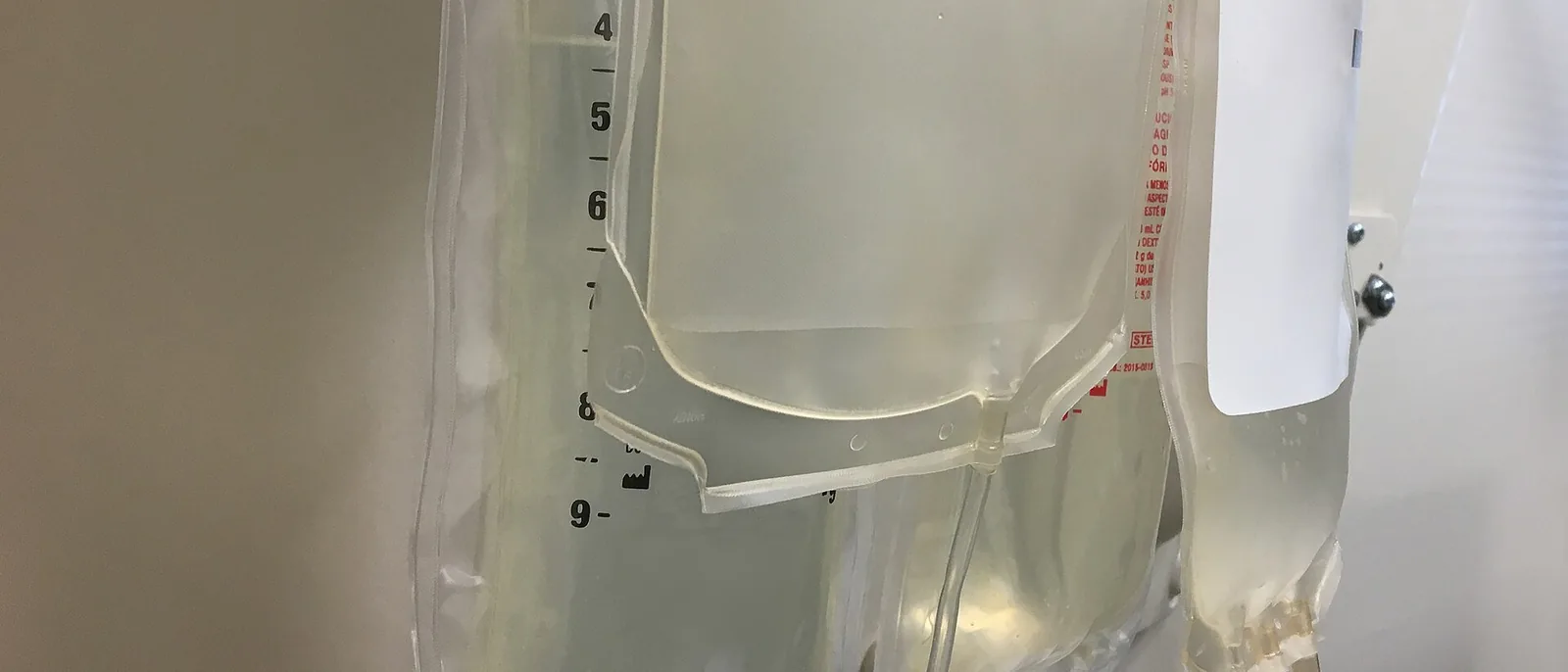
A Myers' Cocktail is an IV that combines magnesium, calcium, B vitamins and vitamin C in IV fluids. At VEI Clinic, by Exit 5 of Apgujeong Station (3F, 162 Apgujeong-ro), an internal medicine specialist first reviews your health and then decides on the formulation and whether an IV is appropriate, and the IV is given in a private room. It is not a treatment for illness, but a supportive option alongside everyday self-care.

The following components are typically mixed into IV fluids. The exact formulation is tailored to you after your consultation.
In a Myers' cocktail, magnesium and calcium are minerals involved in muscle contraction and nerve signaling, and B vitamins help the body turn nutrients from food into energy. The widely published formula includes B vitamins such as B1, B6 and B12 plus dexpanthenol (a form of vitamin B5), and it uses less vitamin C than a high-dose vitamin C IV.
Often shortened to "Myers' IV," the formula is named after John Myers, a Baltimore physician who was an early user of IV vitamins and minerals. The version most widely published today is another physician's refinement of his approach. Because it is a mix of several injectable products rather than a single manufactured drug, the ingredients and amounts can vary somewhat from clinic to clinic. You are always welcome to ask what will go into your IV before it is started.
Some people feel lighter after an IV, but there are few studies supporting vitamin IVs for people without a deficiency. We talk through realistic expectations during your visit and put safety first.
One small trial compared the Myers' cocktail with a placebo IV in people with fibromyalgia. Both groups improved from where they started, but the trial found no statistically significant difference between them. Because the placebo was itself an IV of fluids and electrolytes, hydration, rest and expectation may also shape how people feel after an IV. If fatigue lasts more than a few weeks, we first test for causes such as anemia or a thyroid problem before considering an IV.
Please let us know in advance if you have kidney, heart or liver disease, uncontrolled high blood pressure, G6PD deficiency (a red blood cell enzyme deficiency), iron overload (hemochromatosis) or a history of kidney stones, or if you are pregnant or breastfeeding. High-dose vitamin C can strain the kidneys or carry a risk of hemolysis in some patients, so we decide on it with care.
During the IV you may briefly feel chills or flushing, notice a metallic taste, or have vein irritation or a small bruise. If dizziness persists or you have chest pain or trouble breathing, tell the medical staff right away or seek emergency care.
Dr. HyunSung Park, our lead physician and an internal medicine specialist with subspecialty certification in gastrointestinal endoscopy, sees you in person before prescribing. All IVs are given in private rooms.
After the IV, we recommend drinking plenty of water for the rest of the day, eating a light, balanced meal and resting. If symptoms continue or get worse, please come back for a follow-up visit.
FAQ
There are few robust studies, and much of what is known about its effects relies on personal experience. Some medical references advise against routine vitamin IVs for people without a deficiency, so we decide together whether it is needed after your consultation.
Typically magnesium, calcium, B vitamins and vitamin C mixed into IV fluids. We adjust the formulation based on your history and goals.
Some people feel lighter within a few hours to a day, but responses differ from person to person. It is not a treatment for illness.
Other components such as glutathione are sometimes added. We only do so when it is medically appropriate, using products of verified quality.
They are two names for the same formula. At VEI Clinic the ingredients are mixed into an IV bag and given slowly through a vein, because pushing them in quickly can cause flushing or nausea.
More